Planning
Phuket for Digital Nomads: Working From Bang Tao and Cherng Talay
Wifi, coworking, cafés, the DTV visa and what a month in a villa costs: how the north-west coast works for people who work.

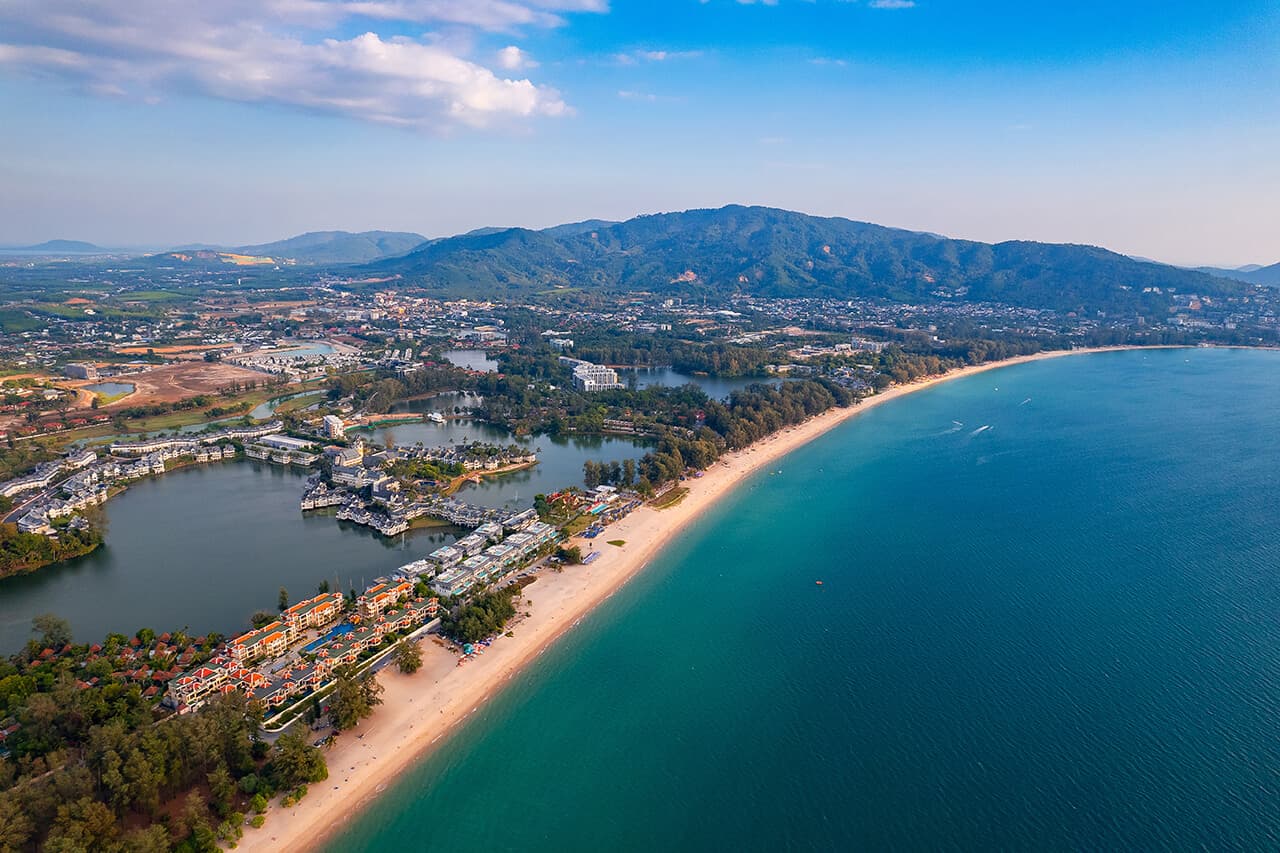
Bang Tao and Cherng Talay are the best base in Phuket for remote workers who want a real home rather than a hostel bunk: fibre internet in the villas, 5G everywhere, a coworking space and laptop-friendly cafés within ten minutes, supermarkets, gyms and an international hospital, and the beach at the end of the road. The trade-off against Rawai and Chalong in the south is price, and against Phuket Town it is nightlife. Here is what the day-to-day looks like and what it costs.
Internet
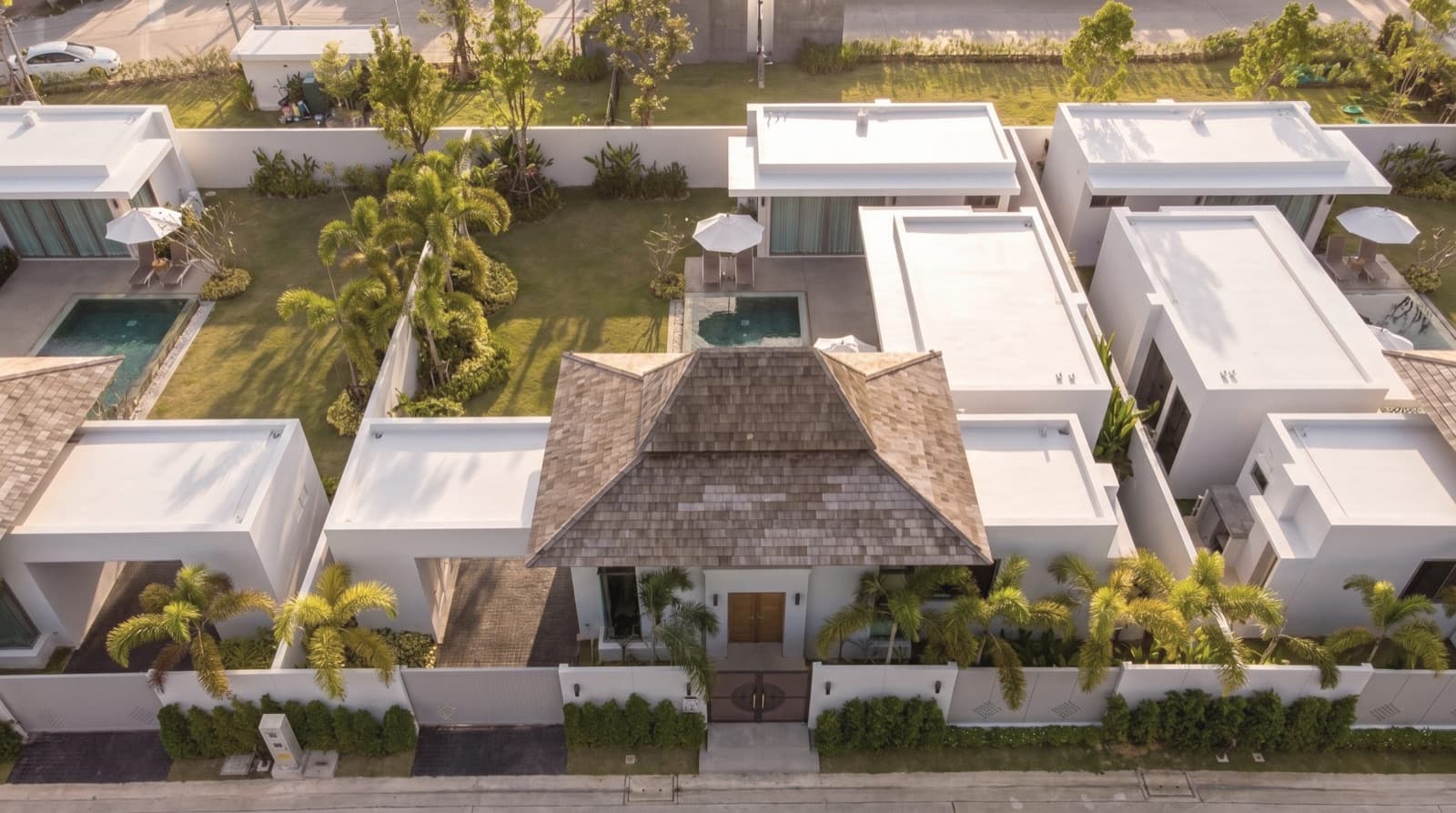
Villas in Cherng Talay are on fibre broadband as a rule: 200 to 500 Mbps plans from AIS Fibre and True are typical in newer homes, and a 50 Mbps line is now the exception. Ask us for the measured speed of a specific villa before you book; we would rather tell you than have you find out on a Monday call. Mobile coverage on the north-west coast is strong: AIS and True both run 5G along the Bang Tao and Cherng Talay roads. A tourist SIM from the airport gives 30 days of unlimited or high-cap data for roughly 300 to 600 baht; a local monthly plan on a passport is cheaper still. Tether to your phone during the two or three power cuts a year and you will not lose a call.
Coworking and cafés
- Coconut Coworking, Cherng Talay. The area's dedicated space: day passes around 380 to 480 baht, monthly hot desks 3,800 to 5,500 baht, meeting rooms by the hour, fibre at 150 to 300 Mbps, phone booths and a kitchen. Confirm current prices and hours with them directly; they change with the season.
- HOMA Cherngtalay. A co-living building with its own coworking floor, free for residents; ask about day access if you only want the desk.
- Cafés. Bake at Boat Avenue is the unofficial nomad office, with proper coffee, an all-day menu and tables that nobody hurries you from. Daily Dose and Kanin are the quieter alternatives. Etiquette is the same as anywhere: order every couple of hours and avoid the lunch rush.
Most people we host end up working from the villa terrace in the morning, when it is coolest, and using a café or the coworking space for calls in the afternoon when the pool becomes a distraction.
The DTV visa
Thailand's Destination Thailand Visa, launched in 2024, is the visa built for this. It is valid for five years, allows stays of up to 180 days per entry (extendable once), and the "Workcation" category covers remote employees and freelancers working for companies outside Thailand. The headline requirements are proof of 500,000 baht in funds, evidence of your remote work or clients, and a fee of about 10,000 baht; since August 2026 you must apply at the Thai embassy responsible for your nationality or residence and include a criminal-record certificate. Rules move, so check the Thai embassy's current page before you plan around it. Short stays still work on the normal visa exemption, but the DTV is what turns a month into a season.
What a month costs
Rates for a pool villa by the month sit well below the nightly rate: as a rule of thumb across the north-west coast, a 28-night stay costs 40 to 60 percent less per night than the same villa for a week, more so in the green season from May to October. Message us with your dates for a monthly quote; the monthly price is not the nightly rate multiplied by 28. Utilities are the thing to ask about: it is common in Phuket for electricity to be billed separately on stays of a month or more, and a villa running two bedrooms of air-conditioning all day uses roughly 6,000 to 10,000 baht a month at the standard tariff.
Beyond the villa, budget roughly: Grab rides across Cherng Talay 80 to 150 baht; a scooter rental 3,000 to 4,500 baht a month with your own licence and helmet; a gym membership 1,500 to 3,500 baht; a Thai lunch 80 to 150 baht, a Western one 250 to 450; groceries at Villa Market or Tops similar to European prices, at the fresh market a third of that.
The routine that works
Early start on the terrace, a swim, a café or the coworking space for calls (Europe wakes up at 2 or 3 p.m. Phuket time, so afternoons are the meeting window), then the beach for sunset. Friday evening is the market at Boat Avenue; weekends are for the day trips. The Bang Tao guide and Boat Avenue guide cover the practical neighbourhood: supermarkets, pharmacies, gyms and where to eat.
Where else nomads settle, and why we would still pick here
Rawai and Chalong in the south are cheaper and have the biggest nomad community and Muay Thai gyms; the beaches are less good and the airport is 80 minutes away. Phuket Town has the cafés and the culture but no beach. Bang Tao is the middle: a proper beach, proper infrastructure, a quieter crowd, and a villa with your own pool for what a serviced apartment costs elsewhere. If you want a co-living scene, stay in HOMA; if you want a house and a routine, take a villa in Cherng Talay for a month and see whether you leave.
Frequently asked questions
Is Phuket good for digital nomads?
Yes. Fibre internet, 5G, coworking spaces, cheap living costs outside the resorts, an international airport and the DTV visa make it one of Thailand's best long-stay bases. The north-west coast suits people who want a home and a beach; the south has the bigger nomad community.
Is there coworking in Bang Tao?
Yes. Coconut Coworking in Cherng Talay offers day passes and monthly desks, and HOMA Cherngtalay has a coworking floor for residents. Cafés at Boat Avenue, especially Bake, are laptop-friendly.
How fast is the internet in Phuket villas?
Newer villas in Cherng Talay have fibre at 200 to 500 Mbps. Mobile 5G from AIS and True covers the whole north-west coast, so a phone hotspot is a workable backup. Ask for a villa's measured speed before booking.
Can I work remotely in Thailand legally?
The Destination Thailand Visa (DTV) is designed for remote workers employed outside Thailand: five years, up to 180 days per entry, proof of 500,000 baht in funds. Check the current requirements with the Thai embassy for your country before applying.
How much does a month in a Phuket villa cost?
Monthly rates typically run 40 to 60 percent below the equivalent nightly rate, lower again in the green season. Electricity is often billed separately on stays of a month or more.